Uncategorized
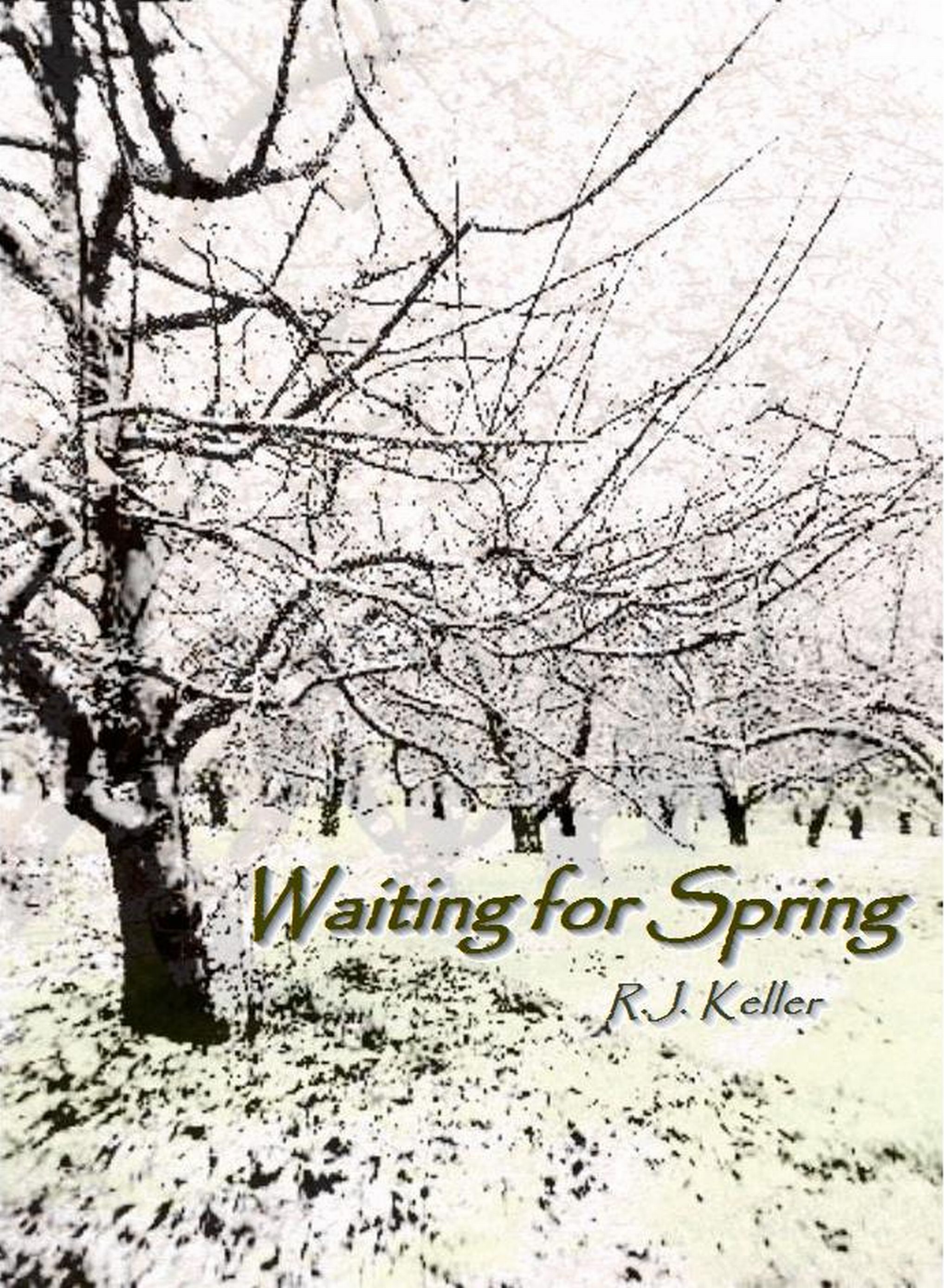
“Waiting For Spring” purchase will benefit Haiti relief
100% of the proceeds from every copy of Waiting For Spring sold at Smashwords (a site that allows you to download books in a variety of formats you can read on your e-reader or on your computer) between now and March 1 will benefit Doctors without Borders.
(NOTE: All WFS sales from Amazon still benefit Spruce Run.)
Backword authors a smash at Smashwords
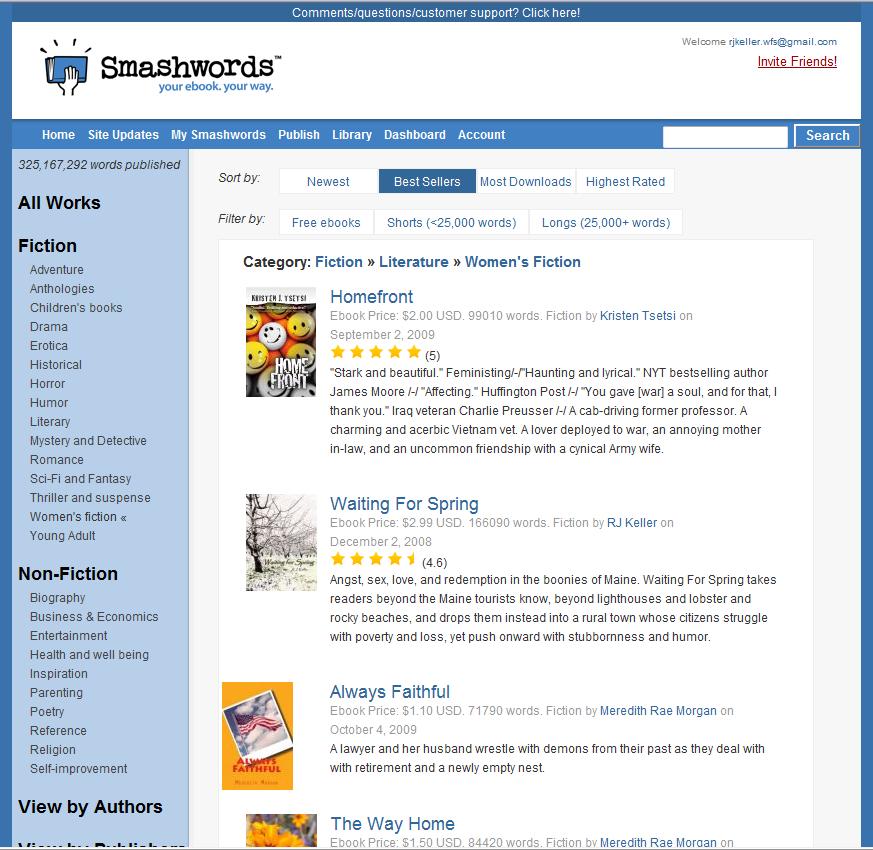 Two Backword Books – Homefront, by Kristen Tsetsi and Waiting For Spring, by RJ Keller, are #1 and #2 bestsellers in Women’s Fiction at Smashwords.
Four Backword books are in the Top Ten literary bestsellers. (Homefront – #1; Waiting For Spring #5; The American Book of the Dead, by Henry Baum #6; Carol’s Aquarium, by Kristen Tsetsi #10.)
To read more about seven of the Backword authors, download Backword Books: Full Frontal — Author-on-Author Interviews about Literary Fiction, Independent Publishing, and Sources of Inspiration and Desperation at Smashwords (set your own price).
In other Backword news, Philip Persinger, author of Do The Math, is now a member. Welcome Phil!
Preparing for a new video blog
It’s been awhile since I’ve made a video blog. The last one was posted in July 2009! Shameful! (http://www.youtube.com/watch?v=DAmlm5lY84c)
I’m getting ready to make a new one, the title of which will be “Questions and Answers.” As you may have guessed, I will be answering reader’s questions about “Waiting For Spring,” as well as about the new novel. Some of these questions are of the “frequently asked” variety, but I would love to answer specific questions from readers here.
So if you’ve got a question about Waiting For Spring (about the story in general, the characters, locations, inspiration, preferred font, etc) or about the progress of the new novel that you’d like to have answered on the new video, please leave it in the comments section of this note.
I will answer every question posted, however unusual. In fact the unusual-er the better.
Backword Books – Full Frontal
 Over a span of seven weeks in the fall of 2009, the Backword Books authors published interviews of each other on the Backword blog. Now, these interviews have been gathered together in a single volume available for free download (or “you set the price“) via Smashwords, allowing authors, publishers, and readers to enjoy these insightful exchanges on a device of their choosing.
The e-book is entitled, “Backword Books: Full Frontal — Author-on-Author Interviews about Literary Fiction, Independent Publishing, and Sources of Inspiration and Desperation.” It includes interviews with:
- Henry Baum, author of “The American Book of the Dead“
- Kristen Tsetsi, author of “Homefront“
- Bonnie Kozek, author of “Threshold“
- Eddie Wright, author of “Broken Bulbs“
- Andrew Kent, author of “Spam & Eggs: A Johnny Denovo Mystery“
- Christopher Meeks, author of “The Brightest Moon of the Century“
- R.J. Keller, author of “Waiting for Spring“
The Backword authors answer questions about their novels (what inspired the stories, who the characters are, what readers can expect going in), and about their chosen genres. Additionally, because each takes a different approach to the work of writing and the tasks of publishing and marketing, you’ll be sure to find plenty of tips, inspiration, and lively exchanges in this volume of interviews.
Check it out!
Merry Christmas
Thanks to all for your friendship and support in 2009!
Quick 4am thoughts about the new book
Rick is a lot smarter than I thought he was. And much more wounded. Wendy isn’t a saint. I need to do some more research about gravel pits, particularly in winter. And I need to learn a LOT more about guns. And forensic evidence. I skated by last time by pushing everything off on Rick; but now…here’s Rick, committing a gruesome murder. I love Rachel even more now than I did when writing Waiting For Spring, something I didn’t think was possible. I’m worried, already, about how to market a second novel when the even the briefest plot summary spoils the first novel. I can already see the book’s cover in my mind. I hope I can make it translate. I’ve already chosen the epigraph:
We all were sea-swallow’d,
though some cast again,
And by that destiny to perform an act
Whereof what’s past is prologue,
what to come in yours and my discharge.– William Shakespeare (The Tempest)
Project 365 – 2010 version
Two years ago, I participated in something called Project 365. The general gist is that you take a picture every day for a year, posting the pictures on a blog. It’s fun, but it also helps you to take some time each day and notice the small things.
I’m ashamed to say that I gave up on my 365 blog about 2/3 through 2008. There are a lot of excuses I could list, and many of them would be valid, but the plain truth is I lost interest in it. Hence the shame. (Here’s the link to the old blog.)
HOWEVER, I am determined to make it work for 2010. To that end, I’ve created a new blog called (uncreatively enough) RJ Keller’s 365 Project – A Year in Photos. I’ve started it off by posting a picture I took in my garden last spring, but the project will actually begin on January 1, 2010.
If any of you are interested in participating, let me know! It would be great fun to have a group doing this together. And to those of you who participated with me last time, I PROMISE I’ll finish this time.
Pro-what?
WARNING: THERE BE SPOILERS HERE! (Seriously…if you haven’t read Waiting For Spring yet and don’t want to be spoiled – and I hope that you don’t – go do something else and save this post for when you’ve finished the book. There’s a good reader.)
When I get negative comments and/or reviews about Waiting For Spring, the criticism usually falls into one of two categories: Number 1, too much harsh language. Number 2, too much sex. Some people, that’s just not their thing, and no amount of reasoning from me, or anyone else, about context and realism is going to change their minds. I’m cool with that. I understand it. Not everyone likes the same thing, the world would be a boring place if we did, etc. Turn the page on a brand new day.
And then there’s the third most common complaint I get. It’s one I’ve yet to see in a public review (I’m sure the day is coming), although I’ve received over a dozen emails about it. Yep…it’s Rachel’s abortion.
As those of you who have been reading this blog for awhile know, I’ve addressed this issue before when a reader complained that I was pushing a pro-choice agenda in writing and publishing my book. I’ll restate now what I said then:
I hate it when an author uses their characters and fictional world as a thinly disguised soapbox. When I encounter that sort of thing in a novel, I immediately throw it down in disgust, because I don’t like being manipulated. And I shuddered to think that’s what someone thought I’d been trying to do to them.
The truth is that, although I do have strong personal opinions about this issue, Waiting For Spring wasn’t written to give voice to them. It isn’t meant to be pro-choice. It isn’t meant to be pro-life. It isn’t meant to be pro-any political issue. It’s honest to goodness slice of life reading, with all of life’s beauty and horror and joy and pain. It’s about confronting and dealing with life’s shit head on, before you get buried in it. It’s about what happens when you don’t do that.
Since that post, I’ve received other emails about the issue, mostly along the same lines. One lady even prophesied that an eternity of hell’s raging fires awaited me, which got my attention. (Mostly because my hair frizzes something fierce in the heat.) This time, however, it’s an email I got from someone on the other side of the issue that is prompting me to address this subject…and here I feel compelled to warn you that this is where the spoilers begin. There’s simply no way of talking about this without the spoilers. The point of no return is beyond the dotted line.
…………………………
Okay then.
This time it’s an email I got from someone on the other side of the issue that is prompting me to address this subject again. It was from a pro-choice advocate who felt that Rachel’s murder represented a sort of Divine Retribution for having gotten an abortion. I know it’s true that, regardless of what an author’s intentions are, we can’t control what readers bring with them when they read our words. A thousand people could read my novel and walk away with a thousand different interpretations of what it’s about and, to be honest, I like that. But this particular interpretation…well, I’ll admit it. It shook me up. Then it pissed me off. Then I cried a little (shut up…even hard-bitten women like me shed a tear or two every so often), because the concept was absolutely abhorrent to me. And I don’t like being thought of as someone who would do an absolutely abhorrent thing.
THE CASE FOR THE DEFENSE
Finally, I talked it over with a trusted friend. Her response was, “It’s not something that even occurred to me when reading it in your book, but I can see how a discussion group might come up with something like that. It’s so easy for readers to attach symbolism and meaning where the author never meant it to be.” Of course, she’s right. I’ve been guilty of the same thing myself. (You don’t even want to be at my family’s get-togethers when the subject of anti-feminist issues in Twilight come up. No sir.) So, in case there are others out there who may have gotten the same impression, I’m going to address why Rachel’s murder DOES NOT represent Divine Retribution, using the context of the novel – rather than my “but that’s not what I MEANT to say” objections – as proof.
1. Tim is such an obvious asshole villain…almost two-dimensionally villainous. Seriously, weren’t you just aching for Tess to blow him away herself? (I know I was, but it didn’t serve the interests of the story, and The Interests Of The Story come before anything else.) Why would I cast such a despicable, disgusting character in the role of Divine Executioner, if indeed I felt Retribution was called for? Tess, as the protagonist, represents the closest thing to a ‘Divine Voice’ in the novel. She not only provides Rachel’s transportation for the procedure, she accompanies her into the actual room and holds her hand while it’s happening. And in spite of her own very strong misgivings – and subsequent feelings of guilt – Tess comes to this conclusion:
I leaned closer and whispered in her ear. “It’s alright. You’re doing the right thing.” I said it even though it wasn’t alright. Not yet. But it would be Someday. I’d make sure of it. And I said it because it was the right thing. For her.
2. Tim himself was killed for bringing about Rachel’s murder. He was killed rather brutally, in fact. ([plug] You’ll get to witness that in the new book. [/plug]) If anything, that was eye-for-an-eye Divine Retribution. The act even brought about a redemption (of sorts) for an otherwise unsympathetic character (which served The Interests Of The Story with a side order of Hell Yes!).
3. If it could be said that Rachel shouldered any responsibility in her own death, it would not be because she had an abortion. It would be because she couldn’t kick her drug habit, and she turned to Tim when she was hard up. She was desperate enough that she did this even though she knew what would probably happen…but that’s another psychological sideroad altogether.
4. In Tim’s mind, Rachel’s pregnancy (and eventual motherhood) was a means for him to have a lasting sense of control over her…period. I used his continued abusive presence in his ex-wife and daughter’s lives to illustrate that. To him, the abortion wasn’t a moral wrong to be righted. It represented a usurping of his power in her life.
WHY USE IT?
I’ll say it again: I didn’t insert abortion into the novel with the intention of sending a pro-choice or pro-life message. So why include it at all? Answer: Purely as a literary tool. Tess suffers from almost overwhelming feelings of worthlessness. Most of that is a direct result of being unloved – even hated – by her mother. The most powerful way I could think of to express that was to have Tess’s mother let her know that she would have aborted her had the law allowed it. It was fitting in so many ways.
1. It’s a despicable thing to tell a child, and I wanted Tess’s mother to be pretty despicable.
2. It fit in with the soil/barrenness motif I had going.
3. It gave me an ostensible motive to give to Tim for killing Rachel. (See this post to learn why Rachel was always gonna die, regardless of how or why.)
Once I made that decision, I followed two well-established rules of writing by using abortion as a running theme.
1. If you introduce a gun in chapter one, you’d sure as hell better let the reader see the thing again before too long – the “gun” in this case, of course, being the subject of abortion.
2. Find your protagonist’s biggest fear or weakness and sock her in the face with it.
CONCLUSION
I will admit that once the issue of abortion was part of the mix, I made the conscious decision to challenge readers’ existing opinions about it…all readers, from BOTH sides of the issue. I consciously worked to challenge my own opinions, too. Ultimately, in spite of the Emails of Chastisement – actually, I think it would be more accurate to say because of those emails – I believe I succeeded. And that is something I’m very proud of.
Vacation
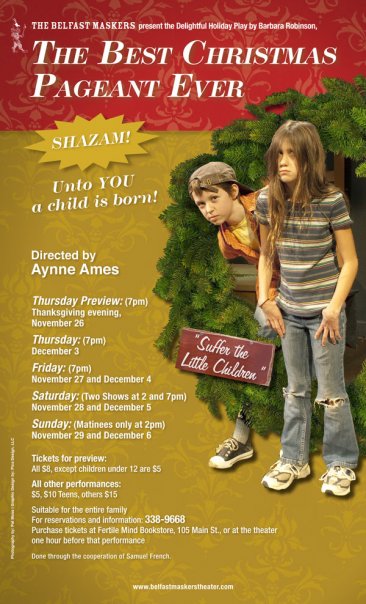 Due to the upcoming holiday week/weekend, family participation in a play at a community theater (if you’re one of my Maine peeps, check out the Belfast Maskers website for ticket information!!!), and third shift workery, I probably won’t be around online too much until the beginning of December. I know how disappointing this news must be, but try to carry on without me. And have a great Thanksgiving!
In the meantime, please enjoy this amazing video:
 R.J. Keller