Beyond the acknowledgments page

Alice in Writerland

The date for Waiting For Spring’s re-release is drawing closer (May 10…less than a month away!), and lately I’ve been thinking a lot about the actual writing of the book. In particular, I’ve been thinking about the people who were of help to me during that process, and believe me when I say there were a lot of them. Today I want to offer a public thank you to one of those people, my friend Alice McCreary, the first person to ever read Waiting For Spring.

It’s an awkward thing, sending something you’ve written to a friend, especially when the question, “Say…what do you think about this?” goes along with it. Alice is a librarian, an avid reader, and an extraordinarily frank lady, so although I was more than a little nervous about handing my baby over to her, I knew that her feedback would be absolutely invaluable.

She read Waiting For Spring a chapter or two at a time starting in January 2007, before it even had a title, and gave me two great gifts: encouragement and HONESTY. Her initial reaction of “I really like this! Send me more!!!!” allowed me to think I was onto something, but as the weeks went by, if something wasn’t working for her – whether it was a character (Brian originally had a very bitchy ex-girlfriend), a phrase (“I don’t know this word…is this a Maine thing?”), or a plot point (“Tess’s mom is a real bitch on wheels. Why did her dad stay with her for so long?”) – she told me so.

Then there was the email that began, “Okay, I’m home from work. Where’s the next chapter????” That was very cool.

So, Alice: Thank you, a thousand times over. Thank you for your willingness to give me so much of your time and energy, for your advice and encouragement, and for your honesty. Thank you, too, for being my friend.

A new look!

Your eyes don’t deceive you. Things look different around here.

Have I mentioned before how much I love the new cover?

I decided to go with a new blue blog theme to match my new blue website theme, which matches Waiting For Spring’s new cover.

Yes, I was just looking for an excuse to post a picture of the new cover. Also I’m all about matching.

Except for my socks. But that’s a subject for another blog entry.

A final excerpt from The Wendy House

This is the last excerpt from The Wendy House (aka Book #2) that I’ll be posting here for a long time. Waiting For Spring‘s re-release is only two months away, and I’ll be devoting a considerable amount of time (and blog space) to that for quite awhile. In the meantime, I’ll be working like a mad woman on Wendy’s revisions…

The hospital room smelled like decay, as though she was already rotting. It was dark, except for the dim, yellowy light coming from the lamp in the corner. The nurse had pulled the shade over the windows so the harsh summer sun wouldn’t get in Wendy’s eyes. Rick thought she might have liked to feel the warmth of it on her skin, but said nothing. It didn’t matter, really. She was gone already.

Asleep. She’s just asleep.

But he knew better. Her heart was beating, but she was gone, had slipped away hours ago. He sat there beside her bed anyway, could have sat there forever. It was the room, the world, where she was still alive. He wanted to hold her hand, to touch her face, but he couldn’t. Brian was sitting across from him, on the other side of the bed. He was clutching a wad of white blanket, barely an inch from Wendy’s arm. He wouldn’t look at Rick. Wouldn’t look at anything except the monitor, at the flashing red heart and blinking lights that told him his mother was still alive. Rick wished the boy would speak, wished he could think of something to say to his son, but what was there to say? Brian wasn’t quite twelve, yet when he had told the nurses, several hours earlier, that he would not leave the room, he had spoken with such quiet authority that they had let him be. But the time would come—it wouldn’t be long now—when the machines would fall silent. And this room would become just another in which she was gone.

The blip-blip-blip of the monitor skipped a beat. Brian jumped in his seat, then looked, finally, at his father. His eyes were dark, just like hers had been—

Still are. She’s just asleep.

—and unblinking. The two of them stared silently at one another for a timeless moment, then back at the monitor as it skipped again.

This was it.

Rick forced himself to look at her face. It was sallow and shrunken, her lips thin and tight. He had kissed those lips when they were dusty from a dry summer road, had fallen in love with her that day, with something in her eyes that was dark and wild. A love so real it was like a creature come to life inside of him. And that face had glowed with moonlight in the backseat of his car. She had smiled down at him that night and he had lost himself in that smile, overwhelmed with the sudden, certain knowledge that his life had never been as good as it was at that moment, that it never would be again. She had loved him then. Her heart had been his.

Now it was all that was left of her, and it was slowing down…slowing down. She was leaving him. Again.

Your hair glowed that night, too, Wendy. It fell on my bare shoulders. You murmured something, I still don’t know what. I pulled you closer because I could already feel you slipping away and I couldn’t bear for you to go. Did I tell you that, Wendy? Did I ever say it?

He hadn’t told her, had never said it. And now the steady whine of the monitor was telling him that it was too late. It was telling him that she was gone.

Fifth anniversary

My messy writing desk.

Five years ago – yesterday – I began writing Waiting For Spring. I started it as an unofficial National Novel Writing Month project, as something to keep myself mentally occupied during a particularly rough patch of bad health, without any plans of ever letting anyone see the thing, let alone of having it published.

As I sat down at the keyboard at midnight on March 1, 2006, I had only a vague idea of what the book was going to be about, having made only minimal notes about characters and settings.  Tess was a widow at that point, her move to New Mills (then called “The New Town Tess Moves To” in an attempt to boost word count) was an attempt to get away from Sad Memories. And so I started by writing Tess’s moving day, knowing only that the chapter was going to end with her meeting Brian.

It took me less than a day of writing to realize that this wasn’t going to work. Dead husbands don’t bring a whole lot of conflict*. Ex-husbands, however, are chock full of it. So as I sat down to begin day two of writing – five years ago today – I knew I had to bring Jason back to life. I also knew that I couldn’t start writing the book from the beginning. I had to be familiar with Jason and Tess’s backstory before I could write anything to do with Tess’s present. But I didn’t know where to begin.

So I sat there, staring at the blinking cursor for a long time. A very long time. My mind was a total blank. I started to think that, maybe, I wasn’t cut out for this whole writing thing. I started to think that, maybe, I should take up knitting instead. Except that I had told everyone I knew that I had started writing a book. I couldn’t quit after one day. I’d never hear the end of it. I had to at least get the NaNoWriMo minimum of 50,000 words out, even if they were 50,000 of the shittiest words ever written.

And then it hit me. What I needed was an end point, a pivotal moment between Tess and Jason that I could write them towards. So I took a deep breath and, without really knowing what I was doing, typed out the following:

I had to look away from his eyes, because I couldn’t let him see mine. Couldn’t let him see the sudden, irrational spasm of jealousy that twisted my heart at the thought of him having our family–our beautiful blue eyed family–with someone else. Someone new.

It turned out to be my pivotal moment. It was the moment I knew what the book was going to be. I could suddenly see their life together, the long, long history between them. I saw what had brought them together and what had torn them apart. I knew what Brian had to be to make up for all of the things Jason hadn’t been. I knew all of it, in just that one moment.

It was a very big moment.

So happy anniversary, Waiting For Spring!


* as opposed to long-dead wives, as is the case in the upcoming The Wendy House. They bring LOTS of conflict.

Like It For Time

Kristen Tsetsi

I was a fan of Kristen Tsetsi years before I had the privilege of calling her my friend, having read her novel, Homefront back in 2007 (it will be re-released this spring as Pretty Much True…). It’s a powerful and compelling book, inspired by the year she spent away from her husband (then-boyfriend) during his deployment to Iraq…although she calls it only semi-autobiographical.

Now Kristen is at the head of an online effort to get Time magazine to make the military family its Person Of The Year. “Social networking websites aren’t just silly distractions,” she says, “they actually make an impact. In April of 2009, actor Ashton Kutcher and CNN received wide media attention when Kutcher challenged CNN to be the first to get one million followers. (The actor beat the news.) Later, in 2010, a facebook campaign succeeded in landing Golden Girls actress Betty White a hosting gig on Saturday Night Live. If actors can use social networking sites to increase their personal fame, surely supporters of military families can be just as successful utilizing them for a far more meaningful pursuit: increasing awareness of a segment of our society that has long been underrepresented.”

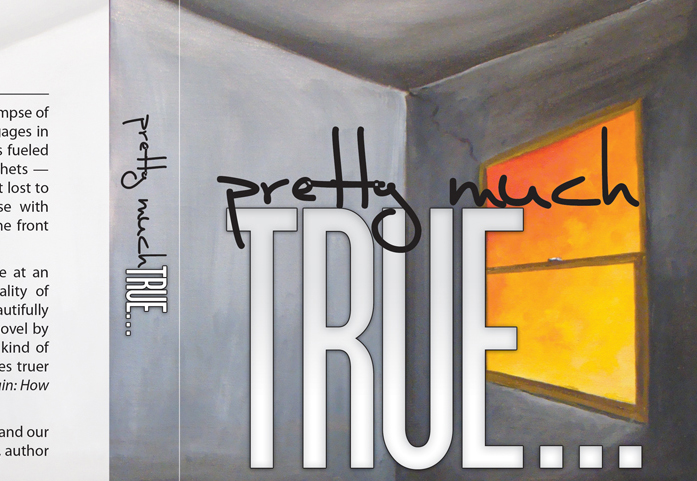
Kristen teases us with the top half of the cover for Pretty Much True...

RJ KELLER: Tell us about LIFT.

KRISTEN TSETSI: LIFT stands for “‘Like’ it for TIME,” the “like” part referring to the “liking” of facebook pages (“like” the LIFT fb here!), the TIME part referring to the grassroots effort to get TIME Magazine to consider the military family as its 2011 Person of the Year.

“Why?” you ask.

Not because I think military families are special and deserve some kind of award. As TIME editors frequently explain, Person of the Year isn’t an honor – if it were, Julian Assange wouldn’t have been in the running for 2010.  I think that, based on the criteria TIME uses to choose their Person of the Year, the military family more than meets it, and now – after a decade of giving up a family member for a year at a time every other year, or so (if not forever) – is probably the best time to do it.

Like It For Time

KEL: What are the criteria?

KRIS: “Person of the Year is given to the person, group, or thing that has most influenced the culture or the news during the past year,” TIME says.

Culture (popular): Oprah’s multiple shows honoring the military family; the efforts of Michelle Obama and Dr. Jill Biden to bring recognition and awareness to military families;  2011 marks the fifth season of Lifetime network’s “Army Wives” (when has there ever been such a show?); and the E! Entertainment channel special, “E! Investigates:  Military Wives.”

Rudy Giuliani was chosen for Person of the Year following the September 11 attacks because he “embodied what was really most important, what we learned about ourselves, which was that we could recover,” explained a TIME editor.

The military family embodies what is most important after a decade of war and multiple deployments: a resilient and unifying force even as the families grow weary of being separated – sometimes permanently – year after year, those years apart filled with agonizing anxiety and uncertainty about the future of their families. And that resiliency speaks volumes about who we are as a country.

KEL: Is this something you’ve been thinking about doing for awhile, or was there a specific incident that inspired you to start this project? (please tell me it was the Zuckerberg thing!!)

KRIS: It was the Zuckerberg thing. The morning TIME unveiled their Person of the Year, I remember thinking it should be someone of more significance/who’s had more of a lasting and important impact. Facebook is great, and it’s enhanced the way people communicate and gather online–it’s certainly helped this effort–but my train of thought very quickly went to the fact that we’ve been at war (or whatever they’re calling it) for ten years in the Middle East, that the military family has been a public topic recently more than they ever have before, and – frankly – they’ve had a far more profound impact on our culture than has, say, Facebook.

KEL: What has been the most rewarding part of this campaign?

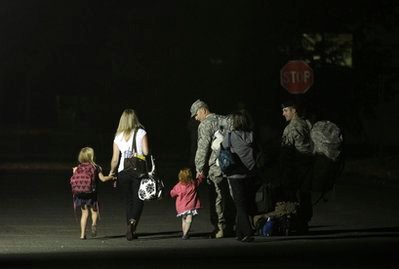
The Evershed family. Pictured: Alyssa(6), Courtney, Ashton(2), and 1SG Jason Evershed walking back to their car after a 12 month deployment. (courtesy LIFT)

KRIS: Two things: 1: This effort immersed me so deeply into the military community that I’ve had the opportunity to see first-hand just how strong and supportive a “family” it often is and how happy I am to be a part of it. (I used to shun it when I was younger and Contrary Without a Cause.)

2. Seeing how enthusiastic people are about it. I am supremely grateful to everyone who’s helped spread the word about LIFT. Media attention is key to the effort. If the military family community and its supporters make enough of an impact to be addressed by the media, people will have to take an interest.

This is just a sample of people who have been incredibly helpful so far, and to whom I’m very grateful.

KEL: What has been the most frustrating?

KRIS: It can be frustrating (or difficult) trying to figure out how to entice people to keep telling friends and family about “‘Like’ it for TIME,” because it’s an ongoing effort – TIME doesn’t start looking at contenders until September.

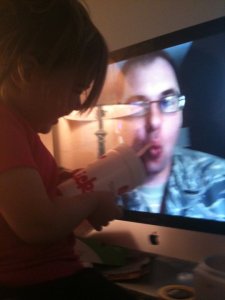
(courtesy LIFT)

KEL: Other than “liking” the Facebook page, what can people do to help Time Magazine make the Military Family Person Of The Year?

KRIS: Tell friends! Lead them to the website (http://likeitfortime.com),  email links to interviews and the photos page,  leave comments about it if it springs to mind while reading articles online (including the link to the website, of course), send messages to local and national media telling them this effort deserves their attention.

KEL: What do you say to people who argue that this effort condones war and that Person of the Year should go to war protesters or advocates for peace?

KRIS: I think most people are advocates for peace. This effort isn’t about war, and it isn’t about peace. That is to say it’s not a political effort. If it’s trying to promote anything, it’s a wider and deeper understanding of the military family experience.Whether you like war or don’t, we’re in it. People we love are dying in it. People back home are trying to figure out how to deal with maintaining normalcy for their children with a parent missing for a year, back for a year, gone again for a year… They’re figuring out how to maintain a “normal” marriage via email, sporadic phone calls, and – frankly – fear of death. They’re trying to get back to a “normal” marriage after a year-long separation. They’re trying to figure out how to help someone with PTSD or a missing leg, how to stop obsessing over their loved one once they come home (emotions that plague you on a constant basis for months at a time can’t be shut off that easily), how to stop feeling anxious, how to not think about the next deployment…

That makes it sound like military families are a wreck. They’re not – but they do have a unique and powerful set of complex challenges.

(credit: Thumbs Up Photography)

People – the 99% of the people who have no direct experience with the military – think they know all the war stories they need to know because they’ve seen movies and read books, but what they’ve read only tells them one side: the soldier’s side. There’s a whole other aspect (and it’s just one of many) of war many people don’t often consider, and what they’re told about it via the news and TV shows is often pretty one-dimensional. This is an effort to get them to look more closely. Read what military spouses have had to say about their experiences here.

KEL: What did you like about Ian’s deployment?

KRIS: Anything I liked about it, I liked in retrospect. I love his letters – he’s the best letter-writer I’ve ever known, and his handwriting on an envelope gave me a thrill I can’t really explain, but at the same time, it was like torture to “see” part of him, but not be able to be with him. It was a reminder that he was so far away. I also liked the idea of seeing him again. Obvious, yes – but not. The idea of seeing him when he came home was a fantasy. It was “Everything will be doves and bluebirds when we see each other.” But in real life, it was as awkward for me as it was exciting. His hand felt more foreign to me than it had felt in my imagination – as would any touch when you haven’t been touched for months. In my imagination, it felt welcome, warm, and “home.” In real life, it felt like holding hands for the first time. I might have blushed. I was shy to kiss him, to look him in the eye. And it was all absolutely beautiful – but it was different than I’d thought it would be. Nothing about the entire experience was simple, and in retrospect, I like having felt all the things I felt. I’ve never had so many emotions – all of them at a peak – at once. Talk about passionate. The whole deployment experience is filled with feelings that are layered, layered, layered…

It might be because I’m a writer that – in RETROSPECT – I appreciate that kind of drama. It’s also important to note that I’m able to appreciate it (in retrospect) because nothing bad happened to Ian. He wasn’t injured, either physically or mentally, so my perspective on our deployment experience is far different from those of others who have had to deal with injuries – mental or physical – or fatalities.

A regular feature of LIFT is the Yellow ribbon questions, or interview with military family members (and I encourage you in the strongest possible way to go read them). I thought I’d turn the tables a little and ask Kristen a couple of those same questions…

KEL: People will often say, if you’re married to someone in the service and they deploy, “You know what you were getting into.”  What’s your response to that?

KRIS: You can’t really fathom what “deployment” means until you experience it. A year away? Well, what’s one year out of our whole lives? Worry? Oh, pish tosh. Worry schmorry. I’m a big girl. Possible death? Yeah, but any of us could get hit by a bus tomorrow. It’ll be fine.

February 2010, Camp Lejeune, NC. "This was the last time I got to lay in my husband's arms before he deployed. I didn't care that he wasn't awake. The only thing I cared about was him holding me in his arms, hearing his breath and heart beating beneath me. I will treasure the memories of that night till he steps off that bus and back into my arms." - Amanda Williams (courtesy LIFT)

It’s a little like this: You say goodbye to the person you love, and you don’t see them for a very long time. They’re alive and you can communicate, but you can’t get at them. You can’t hold their hand or give them just one more hug. Two weeks go by. Two months, and you’re hearing bad things on the news about people not far from the person you love. Four months, now, since the last time you saw them, and you’re really wishing you could touch them for just one second because they could die tomorrow. All this time they’ve been alive on this planet with you, just hours away by plane, but you couldn’t get to them. You’re suddenly tempted to book a flight to Afghanistan or Iraq and do whatever you have to do to find them, because why not? Wouldn’t it be worth it? How can you not try to see the person you love under such circumstances? How can you just sit home and do nothing but wait?

At the very least, if the person you love is hit by a bus tomorrow on their way to work, the last time you saw them was probably today.

KEL: Many have said deployments get easier every time. Do you think it will be easier for you when he deploys again?

KRIS: That would be great. I think I’ll be a little less worried (because I couldn’t possibly be more worried than I was when he was in Iraq in ’03), but I’ll miss his physical presence more. In ’03, we hadn’t yet lived together, so rather than missing what was, I was deathly afraid of us never getting the opportunity to have what could be. (We’d decided to be together just weeks before he found out he’d be leaving for Iraq, and that was after a decade of loving each other from different parts of the country as we trucked along in our very different, very separate lives). When he leaves I’ll miss what is, and I’ll be afraid of losing who I’ve come to know so much better, and love so much more, than I did then.
——————————————————————————–
While doing research for this interview, I discovered the Like It For Time Zazzle store with t-shirts, mugs, key chains and other great items available. All of the proceeds go toward a LIFT promotion blast on September 11, 2011, with remaining monies to benefit Treasure Our Troops. Check it out!
LIFT links:

The Vagina Monologues in Belfast Maine

Next weekend, I will be appearing in The Vagina Monologues with a group of freaking amazing actresses.  It’s a heartwarming, heartbreaking, hilarious play and the proceeds help out two great causes. I am VERY excited about this and I truly hope to see lots of my Maine buddies there.

Here’s the basic info:

WHERE: Waterfall Arts (Fallout Shelter) 256 High St, Belfast Maine

WHEN: Friday and Saturday, March 4 and 5 at 7:15 PM

Price: $10
Tickets for sale at Yo Mamma’s Home and The Green Store in Belfast.

A light dinner will be available before the show for $7.

Proceeds to benefit vday.org and New Hope For Women, an organization which offers support to people in Lincoln, Knox and Waldo counties (Maine) affected by domestic and dating violence and provides educational resources to assist communities in creating a safer and healthier future.

The Vagina Monologues is an episodic play written by Eve Ensler, which ran at the off-Broadway Westside Theatre after a limited run at HERE Arts Center in 1996. Ensler originally starred in the production; when she left the play it was recast with three celebrity monologists. The production has been staged internationally, and a television version featuring Ensler was produced by the cable TV channel HBO. In 1998, Ensler and others, including Willa Shalit, a producer of the Westside Theatre production, launched V-Day, a global non-profit that has raised over $75 million for women’s anti-violence groups through benefits of The Vagina Monologues.

Guest post – Elisa Lorello & Sarah Girrell

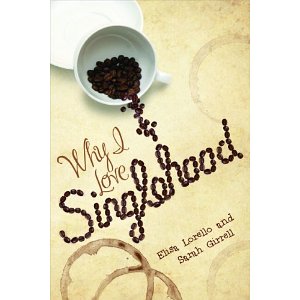
Please welcome guest bloggers Elisa Lorello and Sarah Girrell (both of whom were guests on Book Chatter last Friday night), co-authors of the great new novel Why I Love Singlehood, recently released by AmazonEncore. You can enter to win an ebook of WILS by leaving a comment below. I will draw a name from the comments at random tomorrow.

A Chronology of Valentines

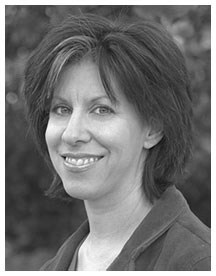
Elisa Lorello

The insanity begins around eight years old, when your mom sends you to school armed with 25 identical cards the size of bookmarks, one for each classmate – even the ones you despise – that says, “You are Special!” You count the cards you receive, desperate to be sure that you weren’t skipped by anyone (and more often that not, you were).

By adolescence, courtesy is out the window and you’re not getting the pity Valentines from politically correct moms. No, you’ve been upgraded to flowers distributed by homeroom teachers, and woe to the one who gets none. (Or perhaps you had the misfortune to be out sick when Valentine’s Day was on a Friday, and returned on Monday to three wilted carnations from your only three friends, none of them boys.)

By eighteen, Valentine’s Day is about the devotion. You not only clean out Hallmark’s card stock, but cuddly toys are now involved. You text your valentine incessantly, trying to figure out how many ways one can say, “I would *so* turn into a vampire for you.”

It only gets worse. At twenty-five, Valentine’s Day is synonymous with credit card debt. Because if you’re not maxing out your Visa on a trip to Puerto Rico with your beloved, you’re with your three best girlfriends in attempt to prove that you don’t need a man. And if, God forbid, you’re single on Valentine’s Day, you’re in that dark place of LIFE SUCKS AND THEN YOU DIE. ALONE. Russell Stover does nothing to dissuade you of this notion.

By your thirties, despite copious amounts of chick lit telling you to do otherwise, you’ve lightened up a bit. You now celebrate Valentine’s Day the day after, when you’ve scored on 50% off chocolates, regardless of whether you’re in a relationship.

By forty, the most romantic thing your Valentine can do for you is buy dishwashing liquid—or motor oil—because he/she noticed you were out of it. And, after considerable Googling, you’ve discovered that St. Valentine had a rather sordid past.


Sarah Girrell

As the years go on, Valentine’s Day turns into a state of being rather than the emphasis on being with – or without – someone else. Reservations are no longer made, but perhaps the table is set with just a little extra care. Roses no longer need to be ordered weeks ahead because favorite flowers are bought on a whim in April or October. Most importantly, you’ve learned the Golden Rule that applies to every day, the lesson that The Beatles (or was it Dylan Thomas?) said best:

And in the end,
the love you take
is equal to the love you make.

_____________________________________

Why I Love Singlehood

Why I Love Singlehood

Eva Perino is single and proud of it. Owner of The Grounds, a coffee shop nestled in the heart of a college town, thirtysomething Eva cherishes her comfortable life filled with quirky friends, a fun job, and no significant other. In fact, she’s so content to be on her own that she started a blog about it: “Why I Love Singlehood.” Yet when she hears the news of her ex-boyfriend’s engagement, her confidence in her single status takes a surprisingly hard hit.

So begins Eva’s clumsy (and occasionally uproarious) search for love as she secretly joins an online dating site, tries her hand at speed-dating, and breaks her own rule by getting involved with one of The Grounds’ regulars. Soon Eva is forced to figure out exactly who—or what—is the true love of her life. Sparkling with warmth and wit, Why I Love Singlehood is a charming and insightful must-read for anyone—single or otherwise—who has ever been stymied by love.

Pass the salt

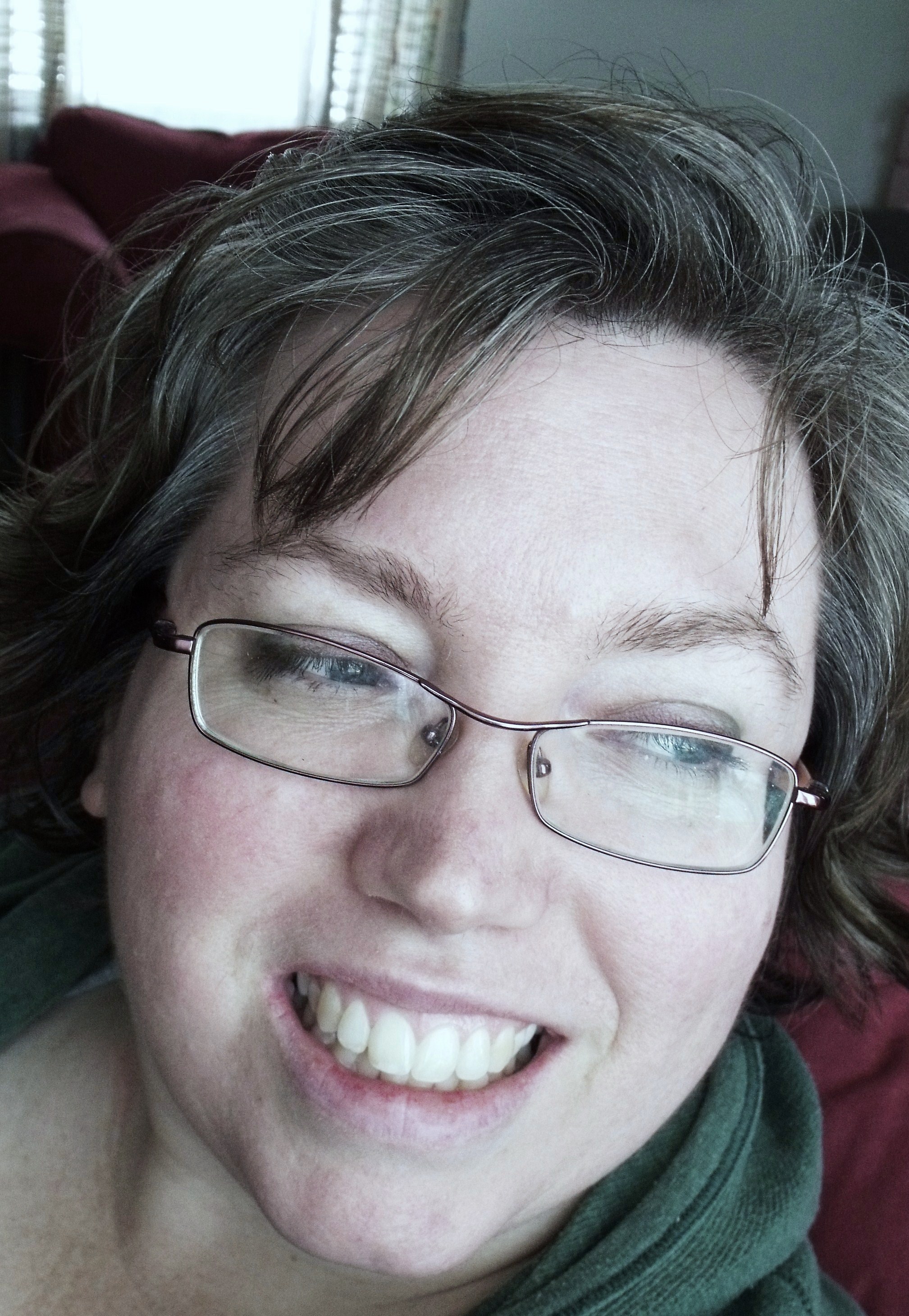
You may (or possibly may not) remember that one of my New Year’s Resolutions was to stop coloring my hair. I further resolved to chronicle the going-gray thing here. So, here’s me this morning. Going gray. Looks like it’s going to be salt-and-pepper. I kind of dig it.

Someone needs to pluck her eyebrows, but that's a subject for another blog entry

Line drawn

There has been a lot of talk lately in the blogosphere about writers being careful with their words, mostly in regards to responding to bad reviews and criticism, and about not getting dragged into idiotic flame wars. I myself wrote about the subject nearly two years ago. Getting involved with that stuff makes you look small and petty, and it can alienate readers. You just don’t do it.

Similarly, unless you’re writing for a very specific demographic, it isn’t a good idea to wear your politics on your public sleeve. Although I touch on sticky moral and political issues when I write, that’s never the focus of any of my work, nor do I write to give my political views a forum. I like to study and shine a spotlight on the human condition through my characters when I write, and because some of those sticky moral and political issues affect my characters, they sometimes share that spotlight. I don’t expound on those issues here on the blog, or on Facebook or Twitter, to any great extent, though, because I want my characters and their stories to be accessible to everybody, regardless of political or religious creed. That’s not possible if my political views are so well known that they color my work in Red or Blue.

With me so far, yes? Okay. Because here comes the “however…”.

However, when it comes to gay rights (or Gay/Lesbian/Bisexual/Trangender rights, to be more specific), I’m not gonna keep my mouth shut. Ever. Because it isn’t a political issue. It’s not Red or Blue, liberal or conservative. It’s a matter of human rights, pure and simple. So when I read an article like this, you’d better believe I’m going to speak out. And if that costs me some readers, so be it.

Yesterday, Utah state representative LaVar Christensen introduced HB 270 – Family Policy:

This bill states, as the public policy of Utah, that a family, consisting of a legally and lawfully married man and woman and their children, is the fundamental unit of society; and requires that publicly funded social programs, government services, laws, and regulations designed to support families be carefully scrutinized to ensure that they promote the family.

It further states:

Families anchored by both a father and a mother, fidelity within marriage, and enduring devotion to the covenants and responsibilities of marriage are the desired norm.

(bold face type mine)

I was raised in a family that was outside what Mr. Christensen considers “the desired norm”. My parents split up when I was five and a few years later my mother began a relationship with a woman who soon after moved in with us. It was a pretty typical parent and step-parent/child relationship. There were family vacations and holidays, help with homework and teenage rebellion. Rewards and punishments, discipline and encouragement. Although my mother and her partner both worked hard, we frequently struggled financially.

My two younger brothers and I were held to high standards, personally and academically, yet we were ultimately accepted and loved for the individuals we were. We were part of a rather boisterous extended family of cousins and aunts and grandparents that was just as supportive and just as accepting. The three of us now contribute to the well-being of society through our respective careers (writer, teacher, journalist), by demonstrating integrity in our personal lives, and by showing unconditional love to our family and friends.

But I still can’t help but think that it would have felt more like a family if my mother and her partner had been able to get married years ago. If I had been able to introduce them as “my mom and step-mom”. If my mother hadn’t had that constant, nagging fear: who will raise my kids if something happens to me?

To Mr. Christensen, and other legislators  who would follow his lead, I have this to say: You have every right to believe homosexuality is a sin. You have every right to believe that marriage between anyone but one man and one woman is wrong. You can preach it to your congregations, you can teach it to your children, you can pray about it to your god. But you don’t have the right to legislate that belief. You have had your grubby, inky, bigoted paws in my family’s life for far too long. I will not rest until you’re made to take them out.

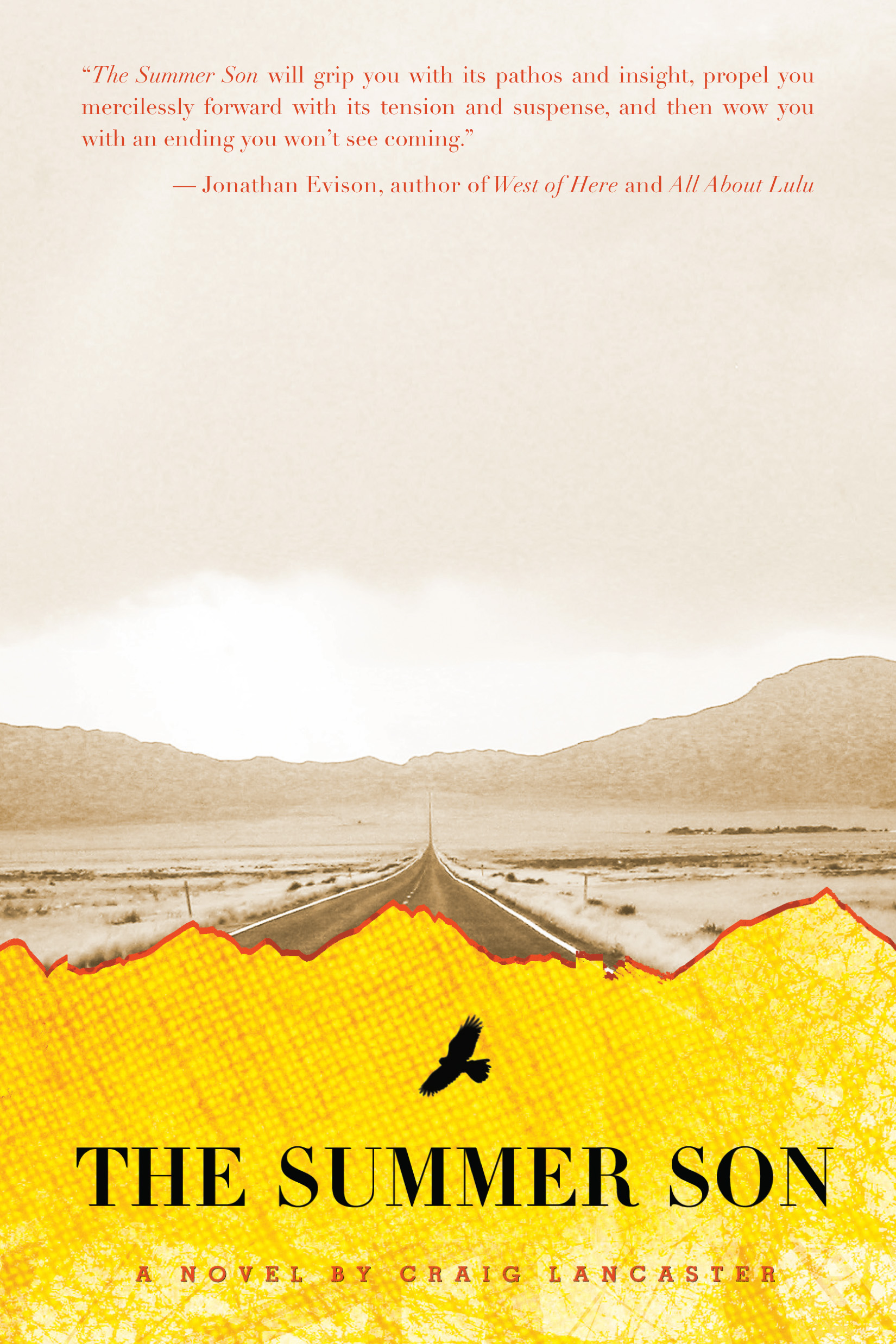
CRAIG LANCASTER Q&A WITH JIM THOMSEN

Details on how you can enter to win a signed copy of Craig’s new novel, The Summer Son, appear at the end of this post. -RJK

——————————-

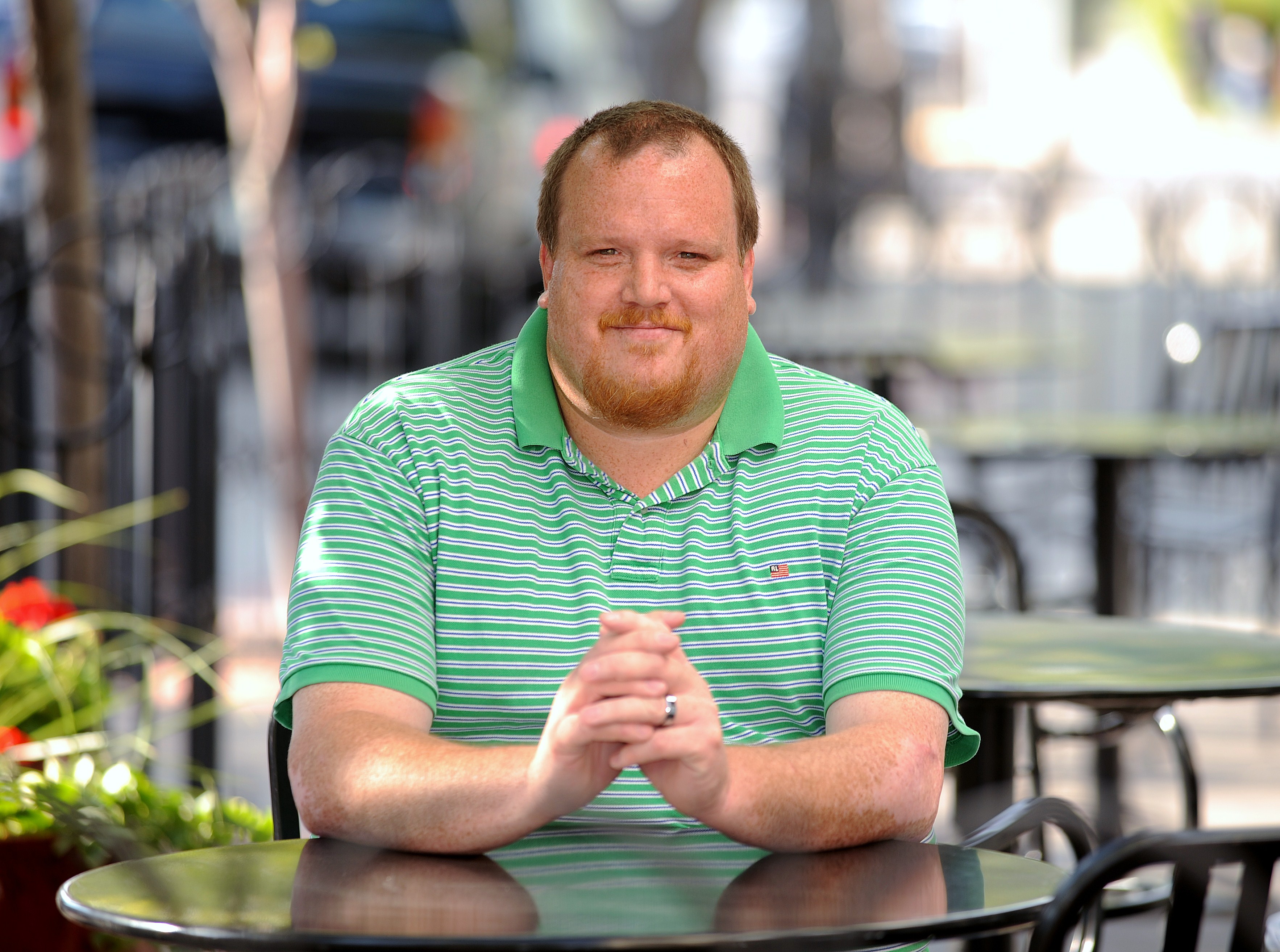
Their friendship was forged in the world of daily newspapers, where Craig Lancaster works as a chief copy editor at the Billings (Mont.) Gazette and Jim Thomsen, until recently, held a similar job at the Kitsap (Wash.) Sun.

When it comes to books and writing, they are literary wingmen – good friends who push each other to do better work and who share occasional miseries and successes. Below, Jim pitches some questions to Craig, the author of 600 Hours of Edward and the recently released The Summer Son, about writing and publishing. Sit back and take in the conversation.

Jim Thomsen: What in your personal history fed into “The Summer Son”?

CRAIG LANCASTER: A lifetime of struggling to understand and get close to a distant father, certainly. This is where I always have to include a disclaimer: Anyone who thinks that I’m Mitch Quillen, the story’s protagonist, or my dad is Jim Quillen, Mitch’s father, is heading down the wrong road. Their issues and protracted distances from each other are much more violent and severe than anything I’ve experienced with my own father, which is what makes their story one worth turning into a novel and ours mostly fodder for quiet reflection.

That said, it’s undeniable that I brought things and places I know into the narrative. Jim is an itinerant well digger; so was my dad. Mitch spends the summer of 1979 in Milford, Utah; so did I. But those really are surface details, chosen because I happen to be familiar with them.Where the story goes, the secrets it unravels, the collision of violence and innocence — it’s all fiction.

JT: Your stories are about the West, but less the Louis L’Amour, cattle-range, Clint Eastwood West than a West that has room for Target stores AND tumbleweeds. How well do these Wests work together, both in your fiction and in the Billings you observe today?

CL: They have to work together, and for any writer working in the West who chooses to write about a contemporary time, there’s no ignoring the fact that Costco, to use just one example, affects those of us in the urban areas and the folks who live in more traditional Western settings. Seriously, if you go to the Billings Costco on a Saturday and look at the license plates in the parking lot, you quickly realize that good chunks of northern Wyoming and eastern Montana have come to the big city to load up on provisions. And what about those odious bull testicles that hang from the trailer hitches of some trucks out here? Those things have to come from somewhere. A city, I’ll bet.

Billings has long had a less-than-stellar image in some other parts of the state, a view I don’t happen to endorse, being a happy resident of the place. I recall reading Ivan Doig’s “The Whistling Season” and one of the characters referring to Billings as the place where the banks and the car lots are. Well, it’s hard to argue with that. But there’s also much to recommend it. I’m quite at home here.

I think part of the reason I’ve been able to be fluent in the suburbs and the earthier locales is that my childhood straddled the two. Nine months a year, I lived with my mother and stepfather and siblings in a garden-variety North Texas suburb, complete with themed subdivisions and fast-food restaurant rows. Once summer came around, I’d decamp for Montpelier, Idaho, or Baggs, Wyoming, or Sidney, Montana — wherever my dad happened to be working. I’d contend that beyond the cosmetic details, life in all those places has more in common with the ‘burbs than it has differences. People work. They raise their kids. They look for something to do on Friday night. They try to get ahead. They go to church. They live. They die.

JT: Obviously, you can’t write worrying about who your audience is or how they’ll receive what you write, but do you believe that there is room in Montana for works of fiction that aren’t patriarchal ranch sagas set on horseback? That allow for fast food and suburban living?

CL: Certainly. It’s been happening for a long time. Kevin Canty’s most recent novel, “Everything,” is a brilliant portrait of life in Missoula now. Larry Watson has plumbed those themes many times. In the wider West, scores of writers — Annie Proulx, Alyson Hagy, Kent Haruf, Sherman Alexie, Benjamin Percy, Jim Lynch, C.J. Box, Craig Johnson, to name a very few — are putting out fantastic books that reflect a more modern view of the West. That’s not to denigrate a good horse opera at all; there’s room for the many, many facets of Western life.

In a recent New York Times profile, Thomas McGuane said he used to bemoan the fact that he hadn’t read a book set in Montana that included a pizza delivery. This is a bit audacious, but I mailed him a copy of my first novel, “600 Hours of Edward,” in which that pedestrian event actually occurs.

JT: “The Summer Son,” at heart, is about a father and sin separated for decades by secrets and stubborn pride and hair-trigger sensitivities. Play armchair shrink for a moment. Why can’t people just talk their shit out? Why do people tell themselves, and each other, that it is actually better not to? The Summer Son - a novel by Craig Lancaster
CL: I’ll give you an answer from my experience as a guy who didn’t have a substantive conversation with my father about his life until I was in my thirties: When one party has gone deep into adulthood without a decent model of love and kindness, who grew up having the shit beat out of him by those who were supposed to nurture him, those scars radiate to everyone who tries to get close. I lived in fear of what my father’s reaction to those conversations might be — not so much that he would become violent with me, because he never did, but that asking him to relive those memories might wound him somehow. The problem was, by stifling my natural curiosity, I didn’t deal very well with his inadequate parenting when I was too young to understand what contributed to it. Fortunately, I have a wonderful mother and a stepfather who showered me with love and encouragement, and I can thank them for raising me to be a reasonably decent man. But I still wanted that validation from my dad, and it was only after I stopped holding him to a standard he couldn’t meet that we began to make some inroads to each other.

One of our big breakthroughs came about a decade ago, when I unraveled the mystery of what happened to his father, who dropped out of his life for good when Dad was about seventeen. Thanks to some Internet sleuthing, I tracked Fred Lancaster to his resting place on a hill in Madras, Oregon, and even came into some contact with people who knew him in his later years. I was able to bring Dad some answers, some pictures of his own father, and perhaps some closure. Dad’s not effusive enough to show it, but I think that moved him, that I would go to those lengths to understand him. Since then, he’s begun to open up about things.

JT: You were fully prepared to self-publish “The Summer Son,” as you originally did your debut novel, “600 Hours Of Edward,” when AmazonEncore came calling. Knowing you well enough to know that you wouldn’t just grab on to any traditional-publishing deal — that you don’t see such deals as validating you as a writer — I know you wouldn’t have signed on with the world’s biggest mover of books if you didn’t feel it was the right fit. In a time of shrinking advances, shrinking royalties, shrinking print runs and shrinking faith in traditional publishing, why was this the right move for you?

CL: The things I look hardest at, in terms of book commerce,are marketing and distribution, because even with social networking and the democracy of e-books, these are the hardest things for a lone author to mount.I can find good editing, good design, good book-building, but my get-out-the-word skills are passable, at best. With AmazonEncore, ciphering out marketing and distribution was a pretty simple equation. It’s part of an organization that has more data on consumer behavior than perhaps anyone else in the world. Add to that the fact that Encore is publishing some tremendously interesting titles and making a name as an author-friendly place, and I didn’t have to spend much time deciding whether to cast my lot there. And now that I’ve experienced the care that went into this book and held it in my hands, I think Encore has trumped me even on the elements that I thought I had under control.

I made a similar decision, on a different scale, with my first book. I’d found some minor success lugging it around in the back of my car, but turning it over to the folks at Riverbend Publishing gave it a reach here in my home region that I simply could not have replicated. Would it have been a Montana Honor Book and a High Plains Book Award winner when I was its sole champion? Perhaps. But I kind of doubt it. In both cases, I’m confident I made the right decision for me and for my book.

JT: You’ve been an unusual success story so far because you’ve had two publishing contracts without the services of a literary agent. I gather that this wasn’t by design, so talk about how this came to be — and how you’d like ideally to proceed in the future.

CL: Well, it’s damned hard to get a literary agent, even for established authors. And I didn’t spring into this thing as a guy with a lot of patience, although I’m slowly learning that life will be easier for me if I develop a bit of it. I had a few nibbles and kind encouragement with “Edward,” but I didn’t find an agent. With “The Summer Son,” I didn’t even look for one. While I’m not an adherent to Ayn Rand, I will admit to a bit of a Roarkian streak that mostly serves me well. I simply decided, well, the hell with it, I’m going to do what I do, and if I do it well enough, representation will work itself out. Eventually. Maybe.

Now, this is important: I am not one of those strident I-don’t-need-an-agent types. I’ve met a few of those, and often they’re similar in stripe to the I-don’t-need-an-editor types who proliferate in the publishing dystopia we seem to be entering. Those people, in my opinion, are delusional. I have a pretty clear-eyed view of the considerable benefits that a good agent delivers, and nothing would please me more than finding a partner as I continue on what I expect to be a long career. But there was no way I was going to put two good novels in the trunk simply because I couldn’t find an agent.

JT: We’ve talked a lot privately about promotional strategies for authors on shoestring budgets. Can you share some of your observations and experiences about what’s worked best — and what hasn’t been so effective?

CL: It’s a wired world, but one of the beautiful things about the book business is that it’s still built on relationships. It’s wonderfully, charmingly low-tech in that way. I’ve certainly cultivated some readers through being available online, but I don’t think my shilling had much to do with it. I’m a human first, whether it’s on someone’s Facebook page or at the library in front of a group of engaged readers. You connect with them, learn a little something about them, share a little something about yourself, and you see the extrapolatory effect as they become advocates for you and your work.

Almost everything I’ve done of a promotional nature has included something in the way of a personal touch. The earliest pre-orders of “The Summer Son” came with a little bonus book called “I Gotta Tell Facebook About This” that was basically a distillation of the wackiest stuff I’ve posted online. I once received an order for “600 Hours of Edward” through my website, and less than 20 minutes later, I was on the guy’s doorstep, handing him his book. He’ll remember that, and I’ll remember him. This stuff is important.

As my first book gained some traction here in my hometown, book clubs started inviting me to come and break bread with them and talk about the book. I absolutely love those invitations. It increases the value of the experience for the people who were kind enough to read my book, and it certainly gives me a terrific sense of validation and some cool new friends.

As far as what hasn’t been effective, I hate to say this because I absolutely love getting editorial reviews, but I haven’t received a published review yet that created a noticeable spike in sales. Word of mouth is the coin of the realm.

JT: Talk about the community of writers, readers and book-industry people that an author must gather to be as successful as possible. What do you ask of them, and what do you volunteer in return? How does one go about building this village?

CL: You are much more qualified to answer this than I am, as you’re the king of gathering in friends from across the industry. I think it goes back to what I said about relationships:
Readers are the lifeline; without them, there is no reason to do the work. And the energy generated by really connecting with folks who are passionate about your work specifically and books in general is drug-like in its potency.

Other writers can commiserate with you, give you advice, create huge breaks for you (I am a Jonathan Evison fan for life for the unbidden kindnesses he’s shown me), show you how to conduct yourself. I’ve been awed by the generosity of some of the people I’ve met, and it has solidified my resolve to be as helpful as I can to anyone who approaches me. On the flip side, I’ve been crushed by the cruelty of a couple of people I’ve met — an extreme minority, thank goodness — but, then, there are lessons in that, too.

Finally, a word of advice to anyone who expects to sell books in bookstores: Know your booksellers. Become their friends. You should do this first because they are, across the board, fabulously interesting people with a boundless love of books. You should do this second because a bookseller who puts your book in his/her customers’ hands is a godsend. So write a kick-ass book and make some kick-ass connections.

JT: Given the unorthodox way you broke into this racket, what advice would you have for writers hoping to fast-track their way to publication? What would you urge them NOT to do?

CL: The term “fast-track” kind of gives me the heebie-jeebies. I know that’s odd to say, given the speed with which I wrote, sold and published my first two novels, but bear with me. This is a fascinating time in publishing, in that the ability to quickly get an e-book on the market has created something of a gold rush among prospective authors. Certainly, if you read the blog of someone like J.A. Konrath, the attraction of rushing a book into the marketplace is powerful. That guy is making money hand over fist, and so are a lot of other people.

But here’s the danger: If you’re in love with the idea of being published but not so much with doing the hard work of publishing a good book, you’re doing yourself and your prospective readers a real disservice. Konrath, for one, talks about publishing almost exclusively in numbers: how much he’s making, how quickly he can write a book, how many books he can write in a year. There’s a seduction in those words, and they perhaps unintentionally reduce book writing to something no more magical than the mass production of widgets. I’ve never found it to be that pedestrian, and if it ever felt that way to me, I’d probably quit. So while coveting publication and all the trappings that come with it, prospective authors should never lose sight of this: It’s all pretty pointless if you’re not writing a good book.

JT: One of the hard realities of being a published author today is that one can’t expect to be successful just writing books — one must also write short stories, novellas, essays, reviews and journalistic articles, among other forms of writerly achievement, to keep the checks coming and their name constantly out in front. Talk about what you’ve seen others do that you’ve admired, and what you’re doing.

CL: I’m not sure it’s just today. Most of the writers I know, even the ones who are unqualified successes, do other things to move the financial chains, whether it’s teaching in an MFA program, setting up writers’ workshops, manning the night shift at a convenience store or, like me, toiling on the copy desk of a newspaper. I admire and envy the writers who have steady gigs teaching in writing programs; I think that would be a marvelous way to keep one’s head in the game, help shape up-and-coming voices and maintain a creative edge on one’s own projects.

What I’m doing these days is writing a lot of short stories and really being attuned to ideas that lend themselves to the shorter form. The way things are looking now, I’ll probably have a collection of stories to pitch before I’ll have Novel No. 3 ready to go. And the nice thing about short stories is that they can be sold to literary journals first, generating a little coin before being gathered up into a bundle. Despite my art-for-art’s-sake answer to the previous question, I like coin as much as the next guy. Maybe even a little more.

JT: Ready for a drink yet? What’ll you have?

CL: Yes, please. The polite drinker in me would like a Jack and Coke. The rest of me, the one trying to cut some pounds, would prefer some Crystal Light. Raspberry, if you don’t mind.

—————————————————————-

You can enter to win a signed copy of Craig Lancaster’s new novel, The Summer Son, simply by leaving a comment below. The winner will be chosen randomly tomorrow, Wednesday February 2, by noon EST. – RJK